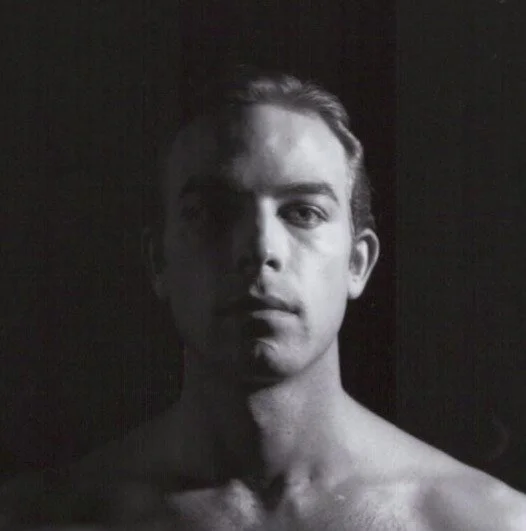
Ken Gilbert
an absurd man - His Sound of Being Alone
A Search and Portrait for the Stage based on my Master of Arts Thesis: This Sound of Being Alone: A Search and Portrait of Albert Camus’ “Absurd Man” – The Actor | Caligula | Meursault.
Here I am; at 74 years, performing on stage to honor a personal accomplishment that I fulfilled over 50 years ago. In 1977, innocent and driven I began a sojourn that has become questioning, exploring and self-defining in my existence of this lifetime. Just a student of dramatic art, I did not realize that I would call myself an artist until 1995 at 44 years.
My curiosity about theater was buried until the end of my second year at Sacramento State College in 1971, when I moved away from Biological Sciences and enrolled in Introduction to Acting and Stagecraft. Building sets and props, performing scene studies, and replacing the actor playing “Walter” in Lanford Wilson’s THE RHYMERS OF ELDRITCH at the American College Festival showed me how written words could become living characters. For the first time, I felt excited by my education and the possibilities of me exploring theater.
In spring 1972, I transferred to the University of California at Davis to complete my undergraduate degree in Agricultural Education with a minor in Dramatic Art. After receiving my Standard Teaching Credential, I entered the Master of Arts graduate program; choosing not to audition for the Master of Fine Arts degree. Once enrolled, I petitioned to develop a written thesis exploring material for a one-man show which I performed in 1977; completing the written thesis in 1983.
I began my research by looking for literature that would support me in creating a character for the stage in the shape of a one-man show. Eventually, Albert Camus’ THE MYTH OF SISYPHUS became central to my two-year study. In his essays, Camus describes the “absurd man,” especially Sisyphus and the Actor, as figures who choose to live and create while knowing that life is ephemeral. That idea became the foundation of both my written thesis and the performance that grew from it. I would perform two characters on stage; a grandiose Caligula (from the 4 Act play CALIGULA) and a simple man Meursault (from the short novel THE STANGER) – both portrayed by The Actor, himself being an absurd man on stage.
From the THESIS (published in March 1983)
There is an absurd confrontation in the universe; this world is teemed with unreasonable chaos and logical man. One day, while living his daily routine, a man pauses and, as if to look at his reflected image in a mirror, sees himself living a series of actions in the world. Actions that have been and are becoming his fate. Suddenly he is aware that he will be lost in the chaos one day, without company, leaving the world and everyone else to exist in his absence.
This realization alienates a man; he is separated from the world by his thoughts and he feels strangely about himself in his life.
“A world that can be explained even with bad reasons is a familiar world. But, on the other hand, in a universe suddenly divested of illusions and lights, man feels an alien, a stranger. His exile is without remedy since he is deprived of the memory of a lost home or the hope of a promised land. This divorce between man and his life, the actor and his setting, is properly the feeling of absurdity. (Albert Camus, THE MYTH OF SISYPHUS)
The feeling a man finds when he is lucid about his fate in the world; when he knows that he must live his life until his death.
The man of which Camus writes, discovers this “feeling of absurdity.” He is alone with nothing to rely on except his own mind and heart – it is up to him to decide what he shall do in his life. (Nathan Scott – ALBERT CAMUS) He must choose how he will challenge the contradictions of his rational self in an irrational world – all the while approaching the end of his life. And, from the heart of this man’s unfulfilled desires comes the cry which is the sound of his alienation from happiness. (Ben Stoltzfus – “Camus & The Meaning of Revolt” – MODERN FICTION STUDIES) This sound of being alone.
It is this sound of Caligula and Meursault, and the actor that dramatically illustrated in this character piece. Each man is shown in his setting; recognizing the absurdity of his passion. (Camus – THE MYTH OF SISYPHUS) A passion that compels each man to search for his freedom from the absurd in order to find happiness.
“For the absurd man it is not a matter of explaining and solving, but of experiencing and describing.(Camus – THE MYTH OF SISYPHUS)