Caligula - a monster
Like Sisyphus, Caligula hates death, loves life, and scorns the gods. Unlike Sisyphus, he rebels against mortality through tyranny; in his defiance he goes wrong.
Caligula became a Roman emperor in his mid-twenties. After his sister and mistress Drusilla died, he grew tyrannical: deceiving nobles, taking their wives, executing at will, blaspheming the gods, and ultimately being killed by conspirators.
In Camus’ play, Caligula has fled the palace after Drusilla’s death and returns under moonlight. He has realized a sudden clarity, driven more by emotion than reason, turns his grief into despair and a desire to abolish death.
Camus’ Caligula is loyal to himself, disregarding others, he realizes the meaninglessness of life and in revolt he becomes nihilistic and tyrannical; and, in the end he is defeated. “I have not taken the way I should have. I arrive at nothing. My freedom isn’t the right one . . . Nothing, nothing yet. Oh, how oppressive this darkness is! We shall be forever guilty. The night is as heavy as human sorrow. To history, Caligula! Go down to history!”
Monologue of Caligula as developed by the actor:
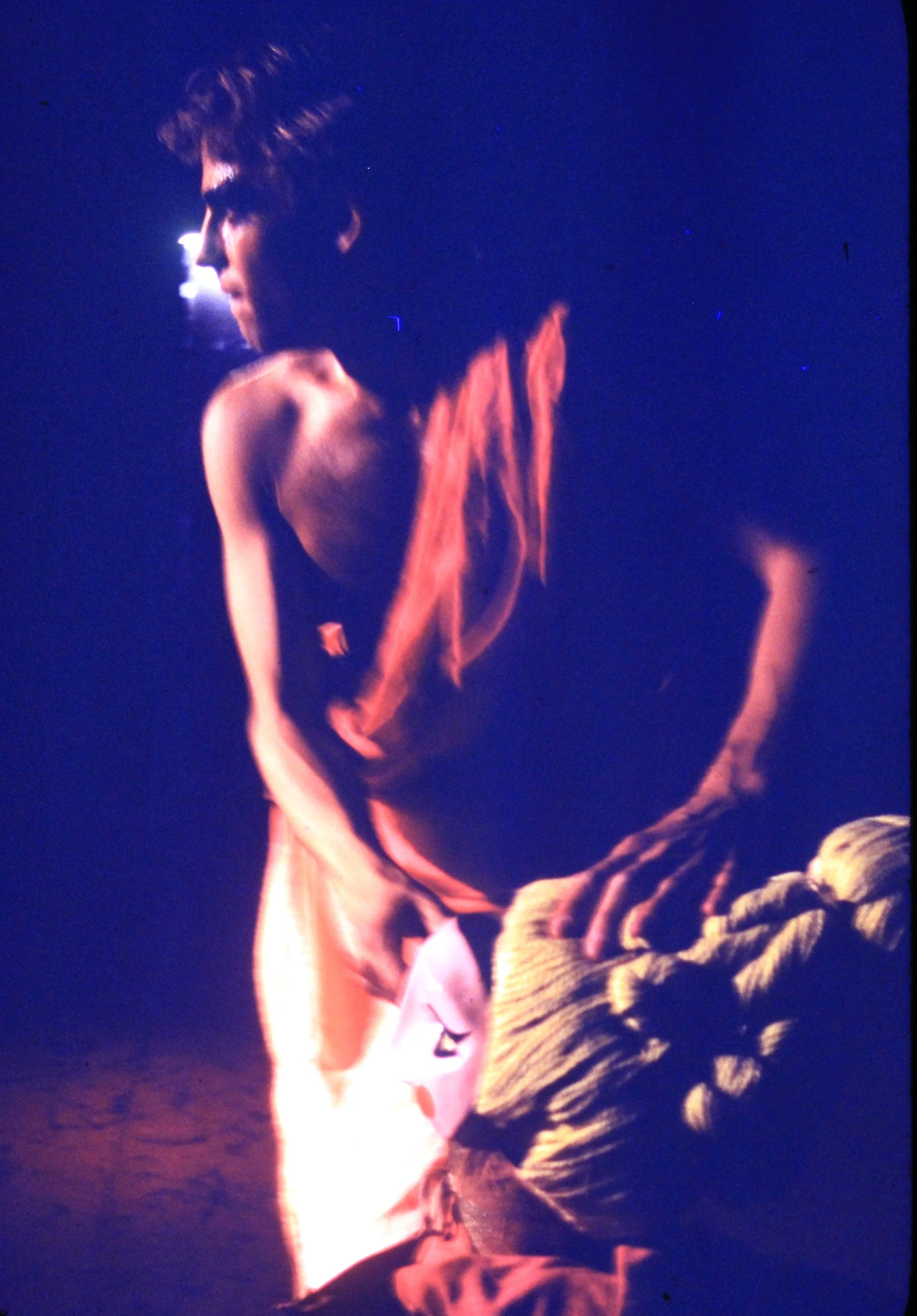
Caligula was a man who imposed his power and whimsical actions upon others. Most of his actions were violent, without compassion, making him appear to be “crazy” after the death of his lover and sister, Drusilla. Given the limitations of a one-character monologue, the violence is shown, not a conflict between two or more characters like in the original play, but as a conflict between Caligula’s mind and body, his logic and his despair – two opposing forces of Caligula’s character.
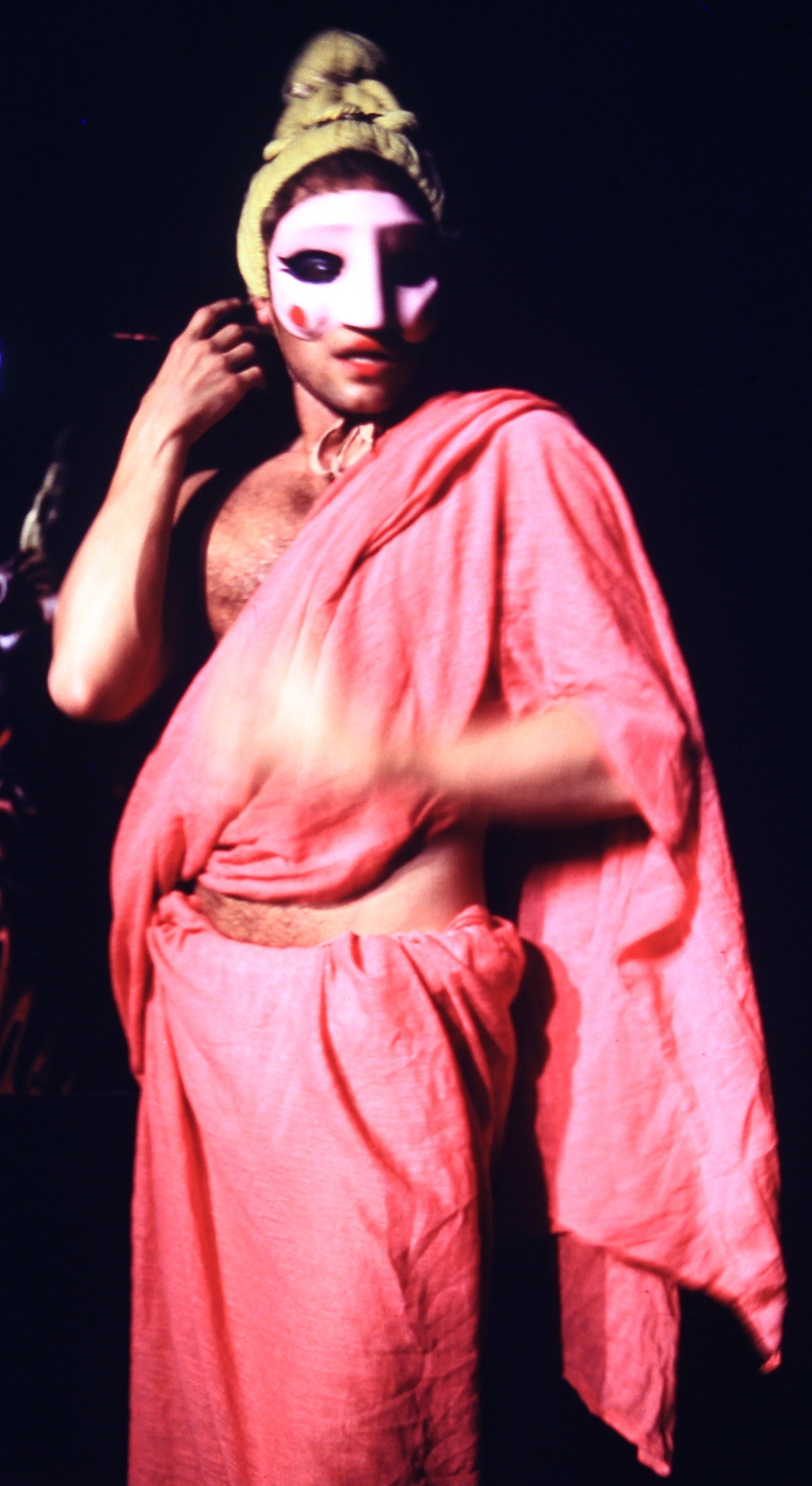
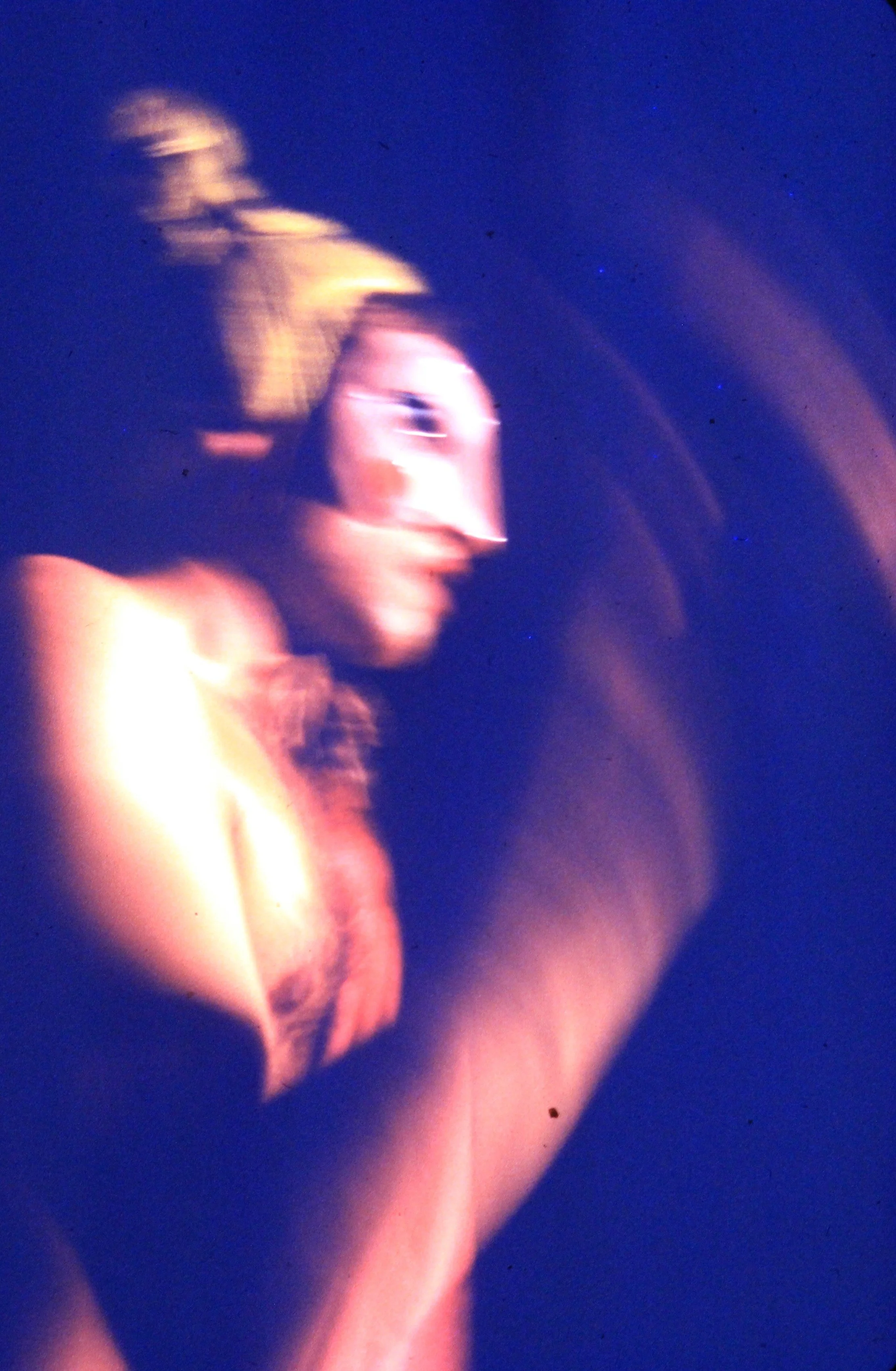
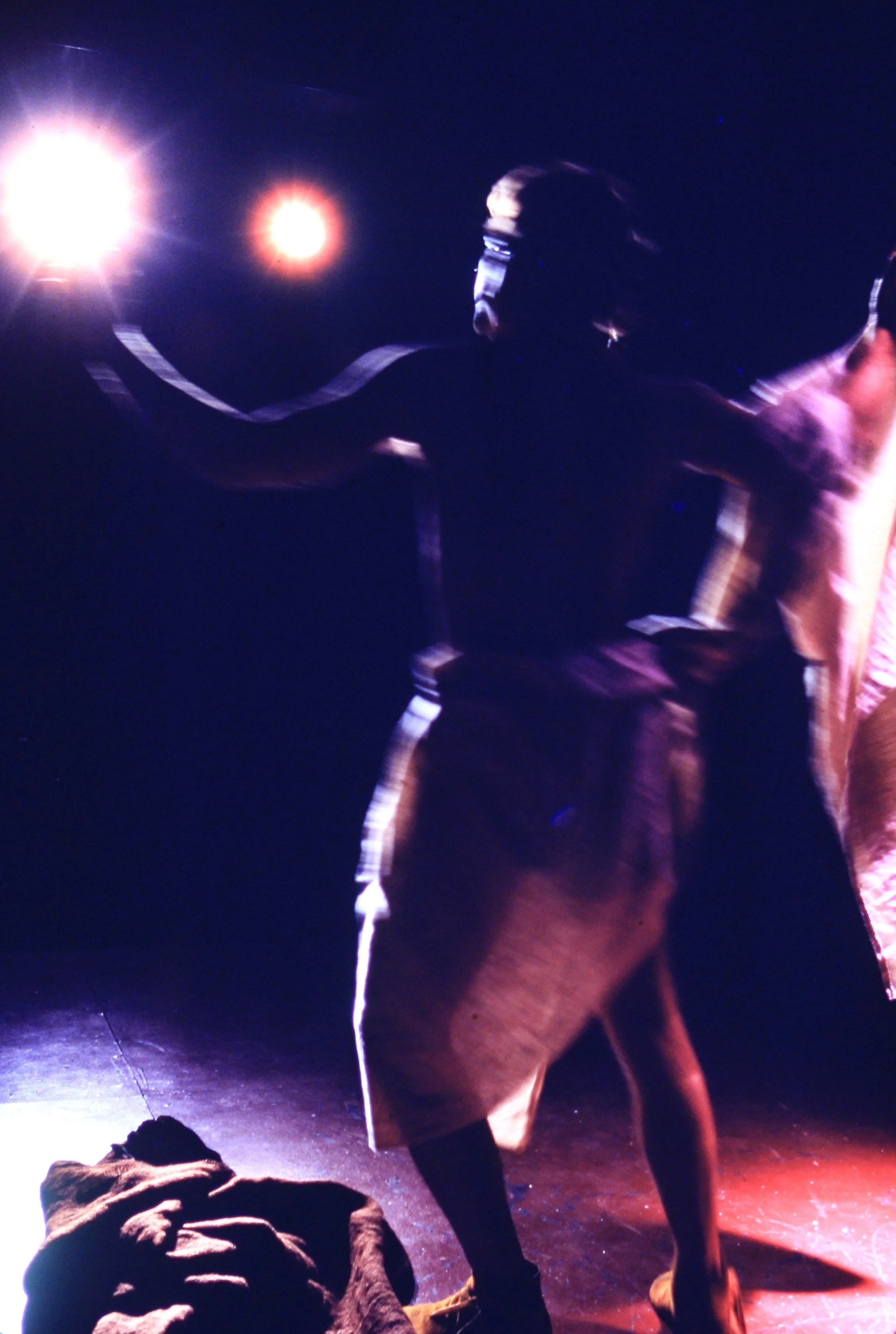
To show his turmoil. I approach Caligula as a combination of three separate parts. He is an emotionally confused and wounded young man – longing for his sister to stand next to him, a monstrous emperor – demonstrating his horrifying logic of torture and death, and the goddess Venus – dramatizing the foolishness of the gods and the fate of men. Each part reveals, through different voice and posture, the actions that Caligula instigates against the “absurd” condition of men in the world. Caligula is unhappy; he will not accept the truth about death and he cannot reach the moon as he searches for something out of this mortal world. These problems, as Caligula comes to know them, throw him into the process of confronting his own fate in the world. While he moves about his chamber and occasionally stares at this reflection in the mirror, the three roles clash while he chooses the actions that take him to his inevitable death.
The Set - Caligula:
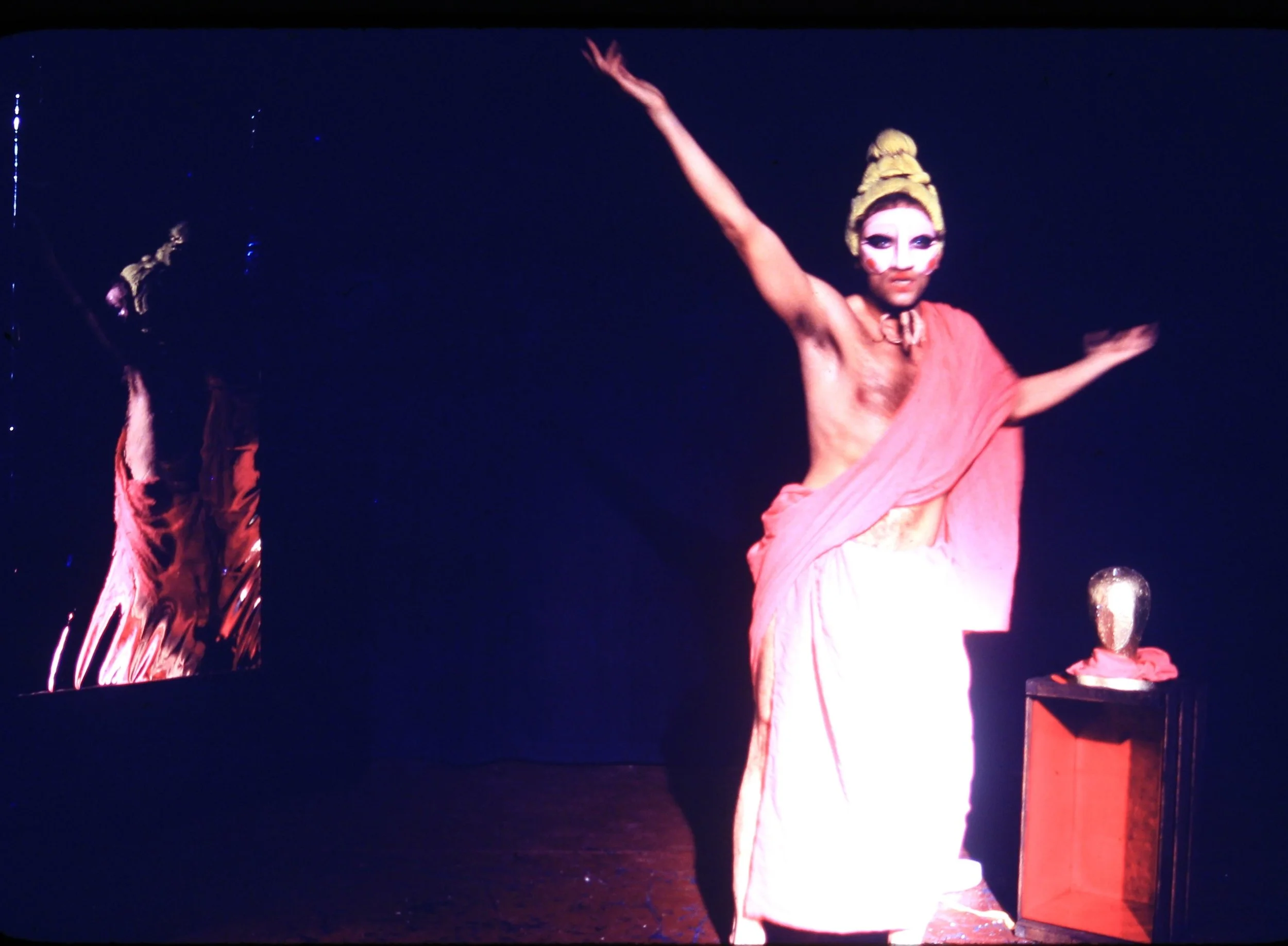
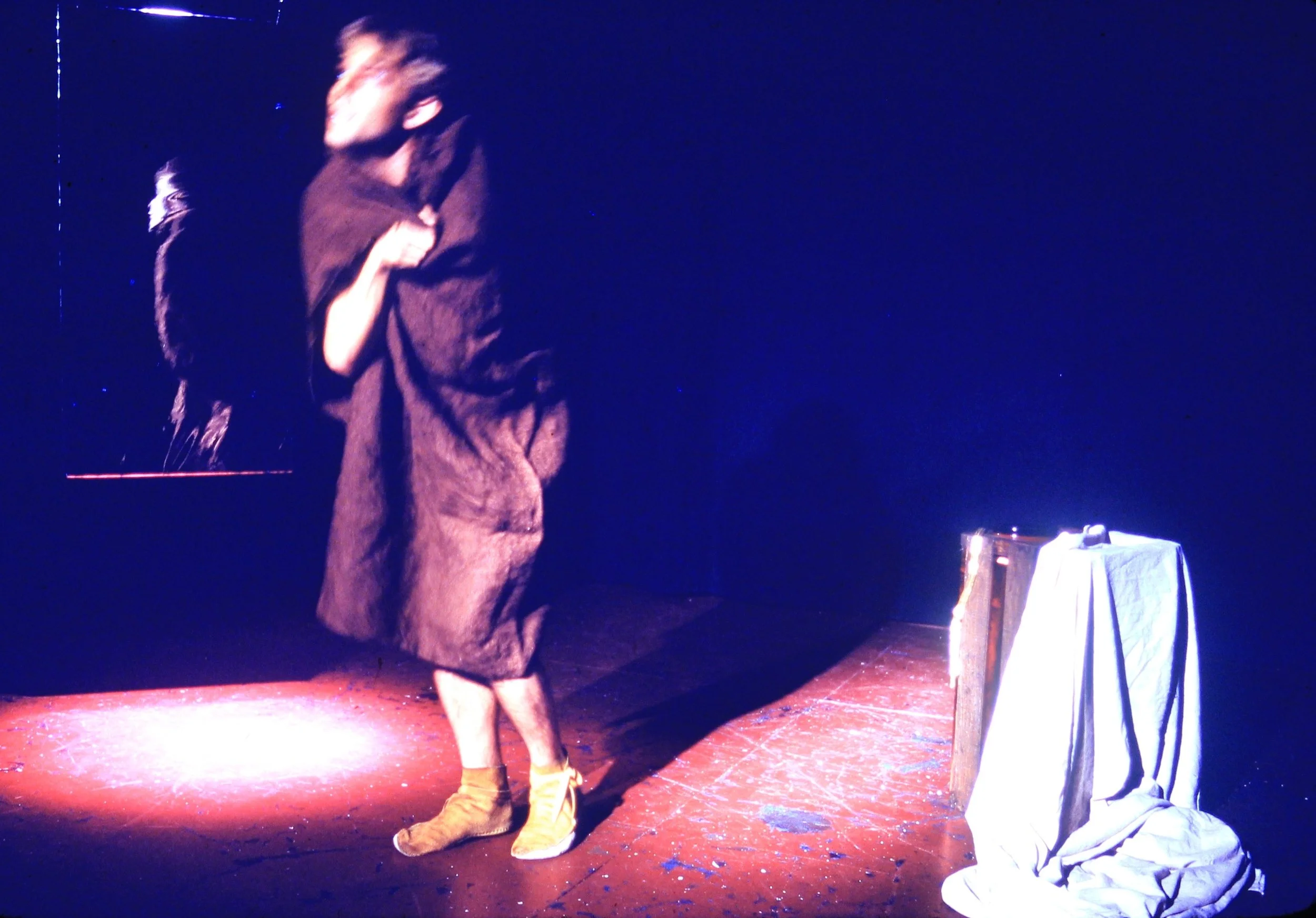
Caligula’s chamber on stage right of center stage. On the right side of the set hangs a large silver mylar mirror suspended from the overhead grid. The mirror is at an angle so that the audience will see the images reflected in it. A wooden box stands on the stage left side of the set. A large piece of white cloth is draped over one corner of the box; over the other corner is a ‘gold” head band, and on top of the box sits a small oval container. The chamber is lighted by a round pool of cool (blue) light – encompassing the mirror and box. This is the moonlight in which Caligula acts. One bright (no color) special is shown directly down on the area in front (down-stage) of the mirror.
Costumes – Caligula:
Brown hopsack mantle
Soft Leather Boots
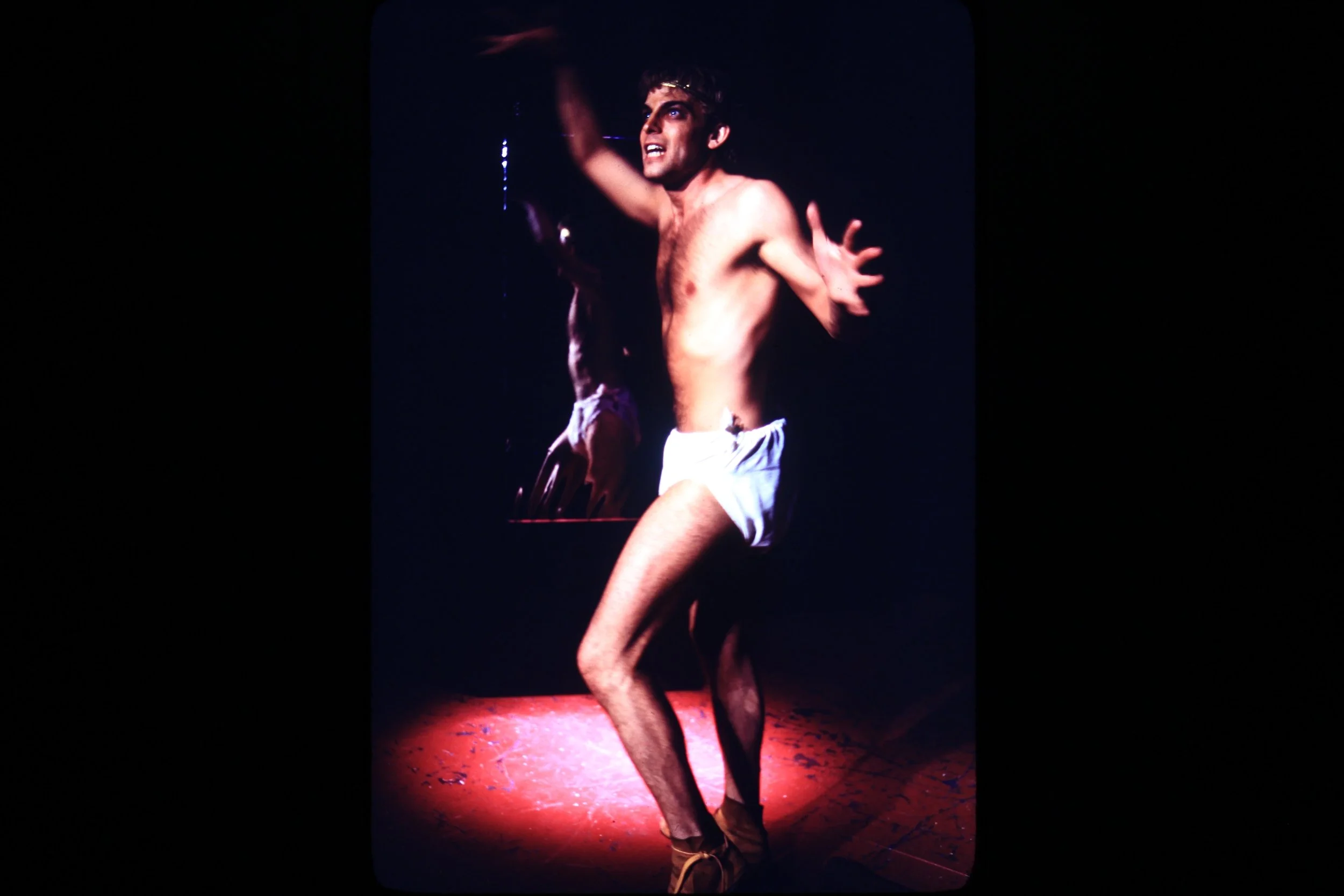
White diaper-like pair of shorts
Gold ribbon headband of Emperor
White Cloth – Robe of Emperor
Red Gown of Venus
Venus wig
Venus mask
Red lip pencil
Red nail polish
The monologue begins:
Caligula enters his chamber wearing a brown hopsack “mantle” (a short robe wrapped around himself). He wears a pair of soft leather boots. He is disheveled, unshaven and in pain.
He walks downstage to the audience, looking up at the moon.
“I wanted the moon. It’s one of the things I haven’t got. In the past I didn’t realize it, but now I know. This world is unbearable. That’s why I need the moon, or happiness, or immortality. Something crazy, maybe, but out of this world.”
He turns upstage to see himself in a full-length mirror. He removes the mantle; standing in a white diaper-like pair of shorts.
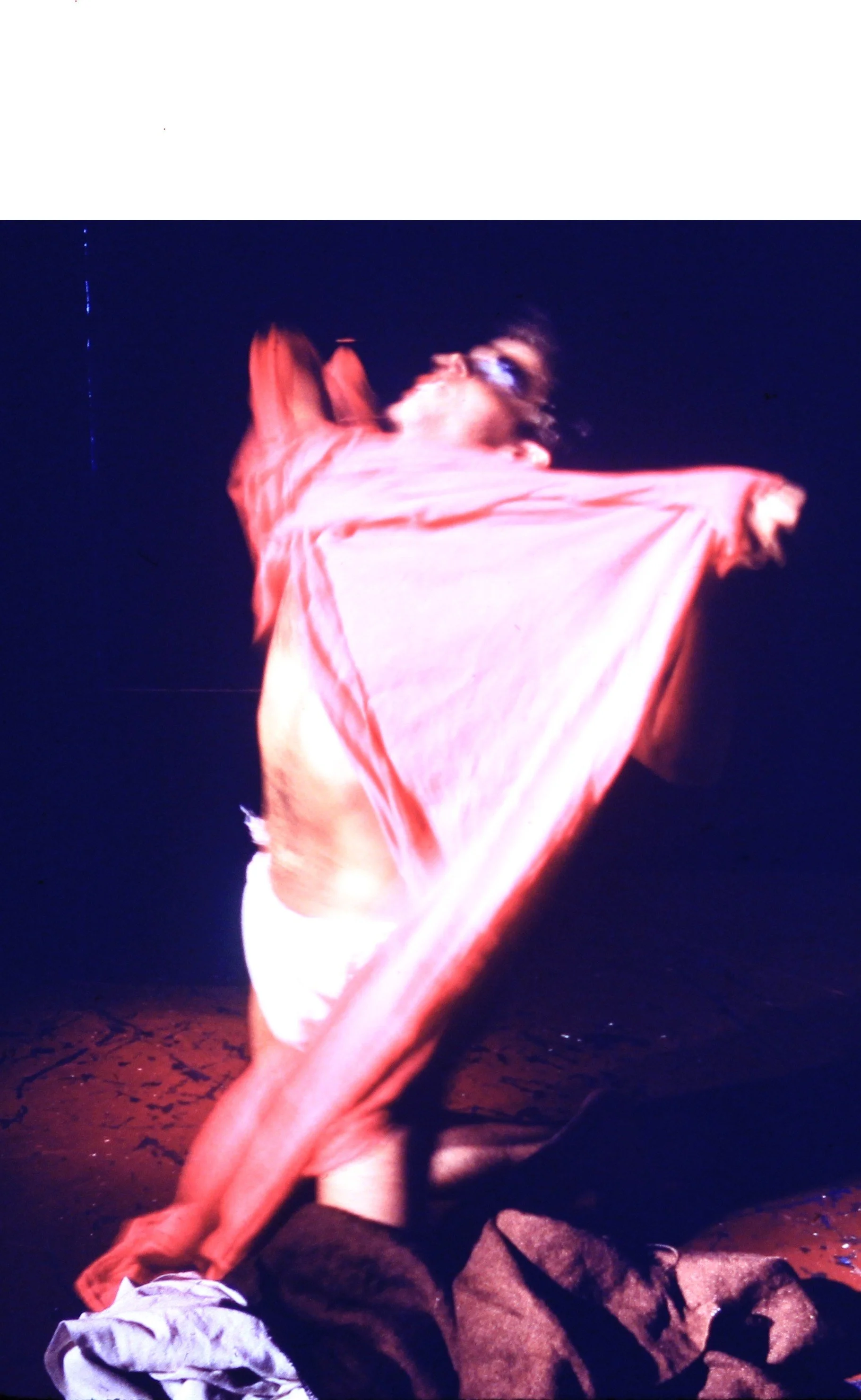
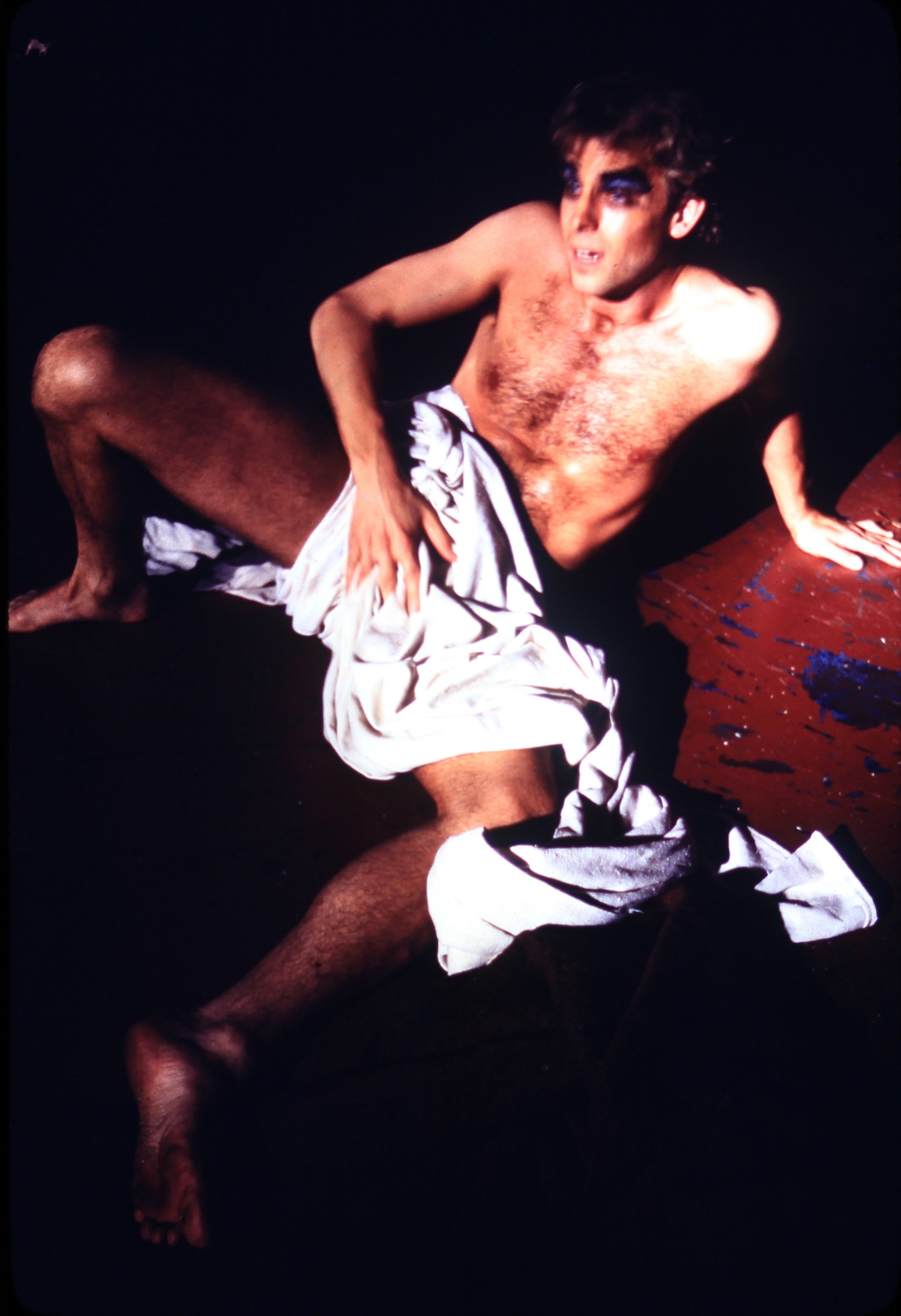
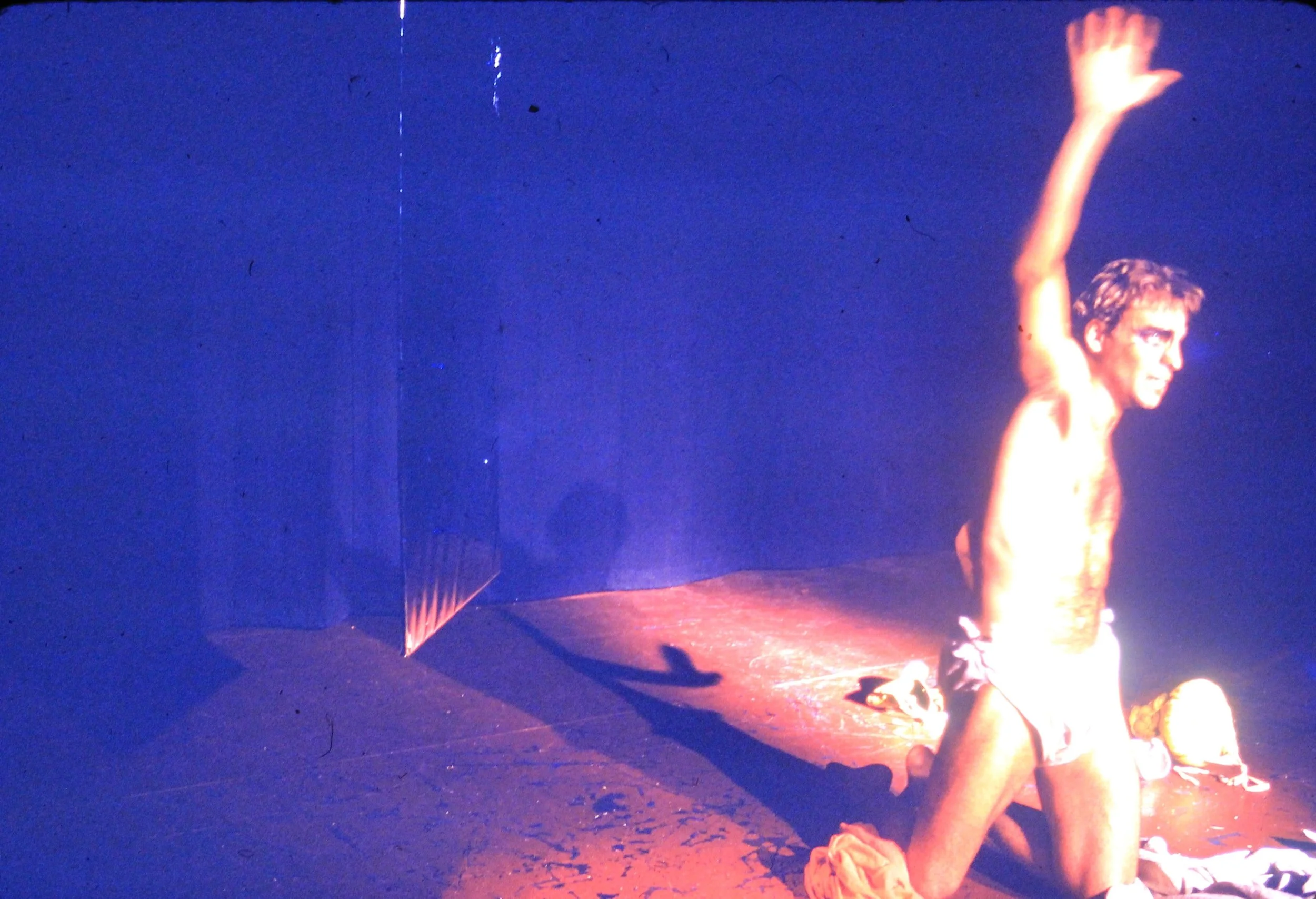
The script is not included on the site; however, the images are from the original staging of the project at UC Davis - Studio A. Photos: Roy Wilcox