Meursault - an ordinary man
Like Sisyphus, Meursault in an absurd man. He lives his life with detachment, yet he lives in a world where he lives in the repetition of his daily tasks.
Meursault is a man working in an office. Outside work he goes home, lies down, smokes until dinner, returns to bed, and sleeps until morning. On Sundays he rises late and stands at the window, watching the sun or rain, passersby or the empty street. All year long, he waits.
One day, his mother dies, and he attends her funeral. A few days later, he meets Marie and befriends Raymond. Then, one afternoon, while walking along the beach he is overwhelmed by the sun’s intense heat, he shoots an Arab. He is sent to prison.
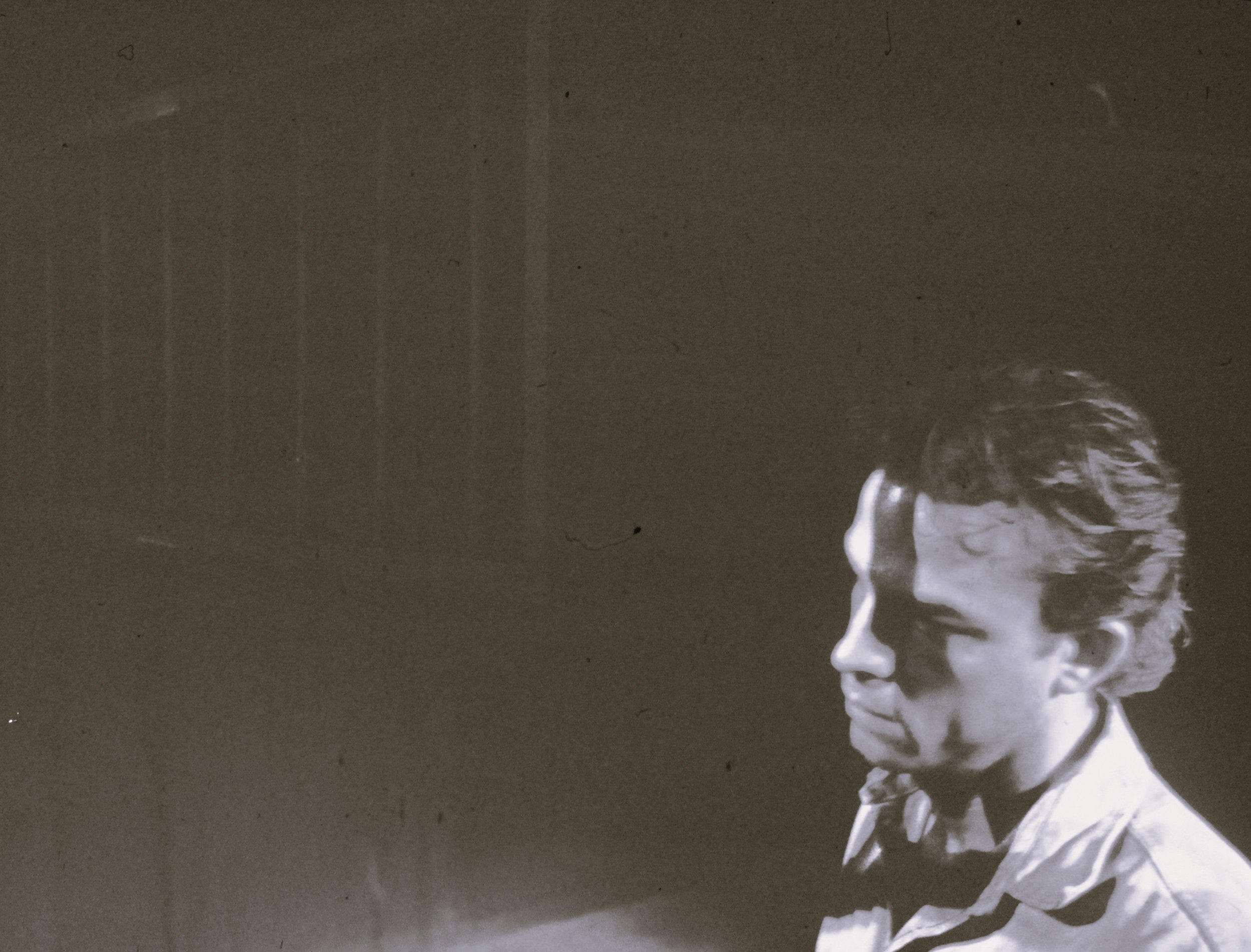
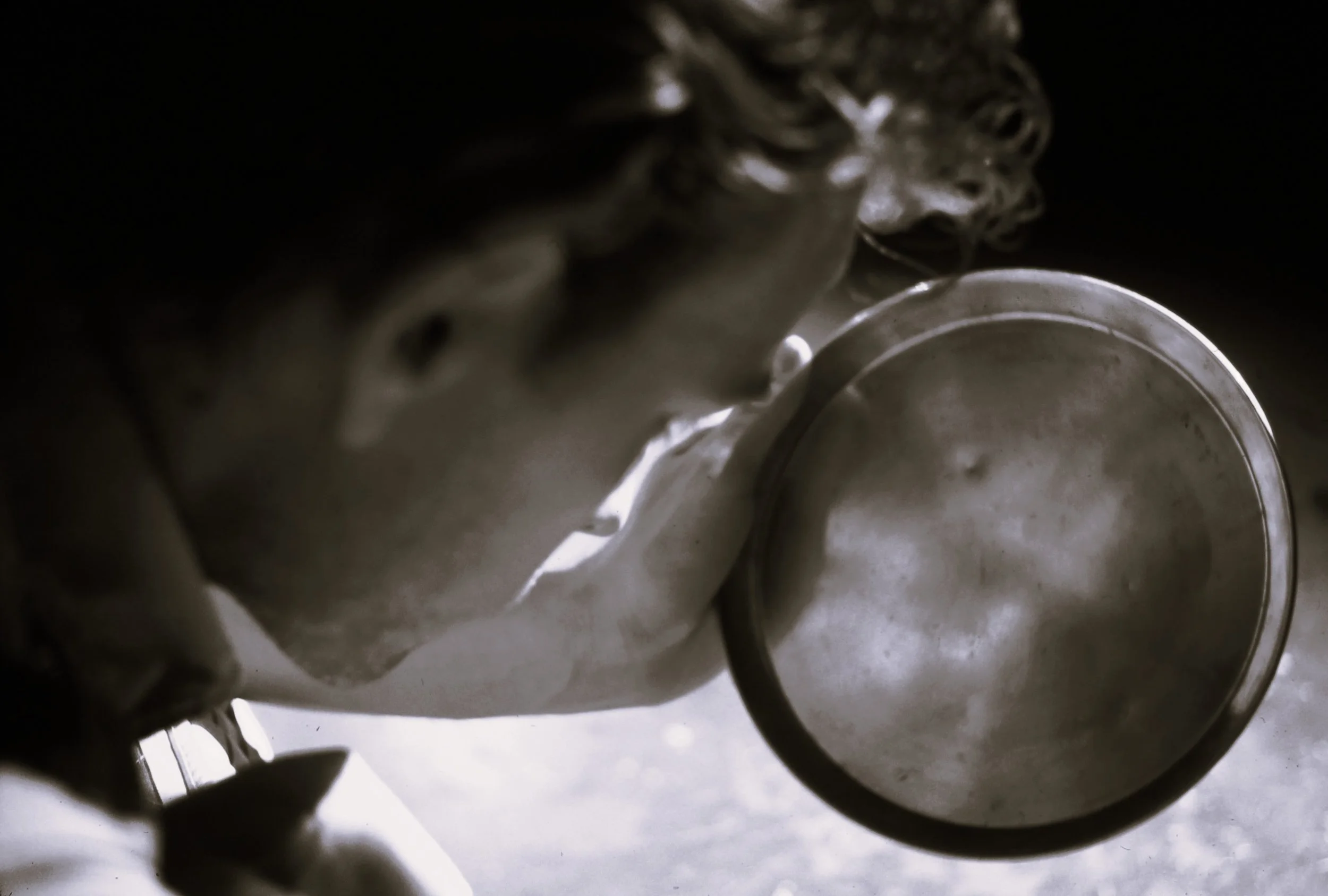
Separated from his routine, he begins to reflect on himself and his place in the world. He becomes a stranger to the world around him, to himself, and to his crime. In confinement, he studies his image reflected in a tin plate. He listens to the sounds of the prison and the sea - he reflects on his life outside prison.
The days pass as he sits, stands, and thinks, waiting for the verdict. Meursault welcomes the past and future and, as an absurd man, he comes to appreciate moments in his life. From his cell: “I am ready to start life all over again. It is as if I am washed clean, emptied of hope. I open myself up for the first time to the tender indifference of the world. I have been happy, I am happy still.”
Monologue of Meursault as developed by the actor:
Meursault in his prison cell is stripped of all his possessions, He is isolated from the sunlight, he sits and moves quietly about the cell watching the light of the sun change color. He goes to trial for murder and is sentenced by the jury. Once he was innocent about life and death in the world; now he begins to understand his love of life and he becomes willing to accept his fate. He confronts his dismal situation by comparing it with his past and his newly found thoughts and feelings.
I chose to illustrate Meursault alone; a man speaking his thoughts while he recalls and sorts out important images, thoughts, and ideas from his past. Within the limitations of the monologue, Meursault is no longer able to freely move about in the comfort of a daily routine outside. His familiar world must be looked at from the inside of his prison cell. He is separated from his outside life and he looks at it in retrospect. He is forced to confront his confinement with his memories with the inevitability of his execution – these are the at conflict in Meursault’s recall of his sentient life outside and his thoughts in being alone.
The Set – Meursault:
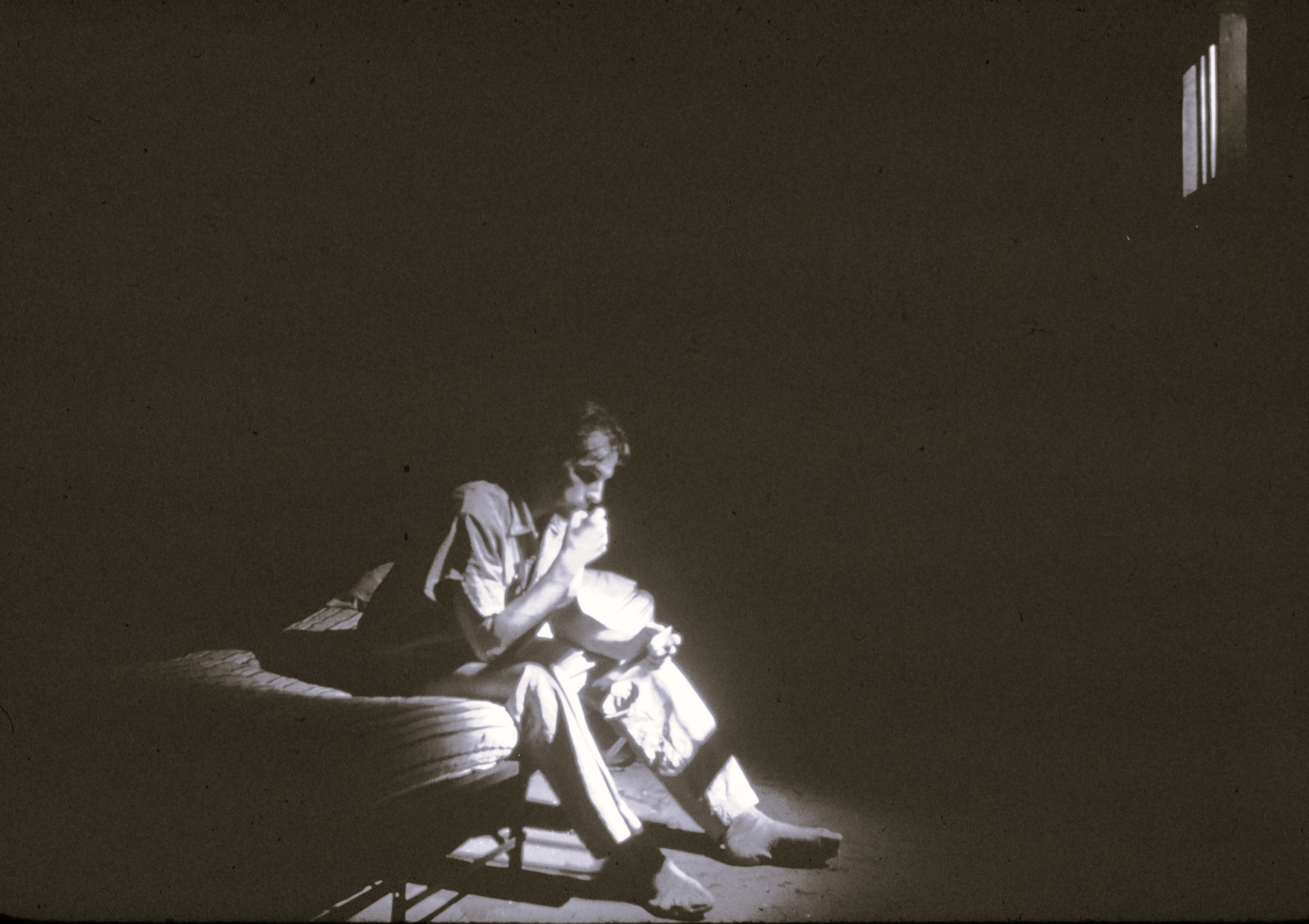
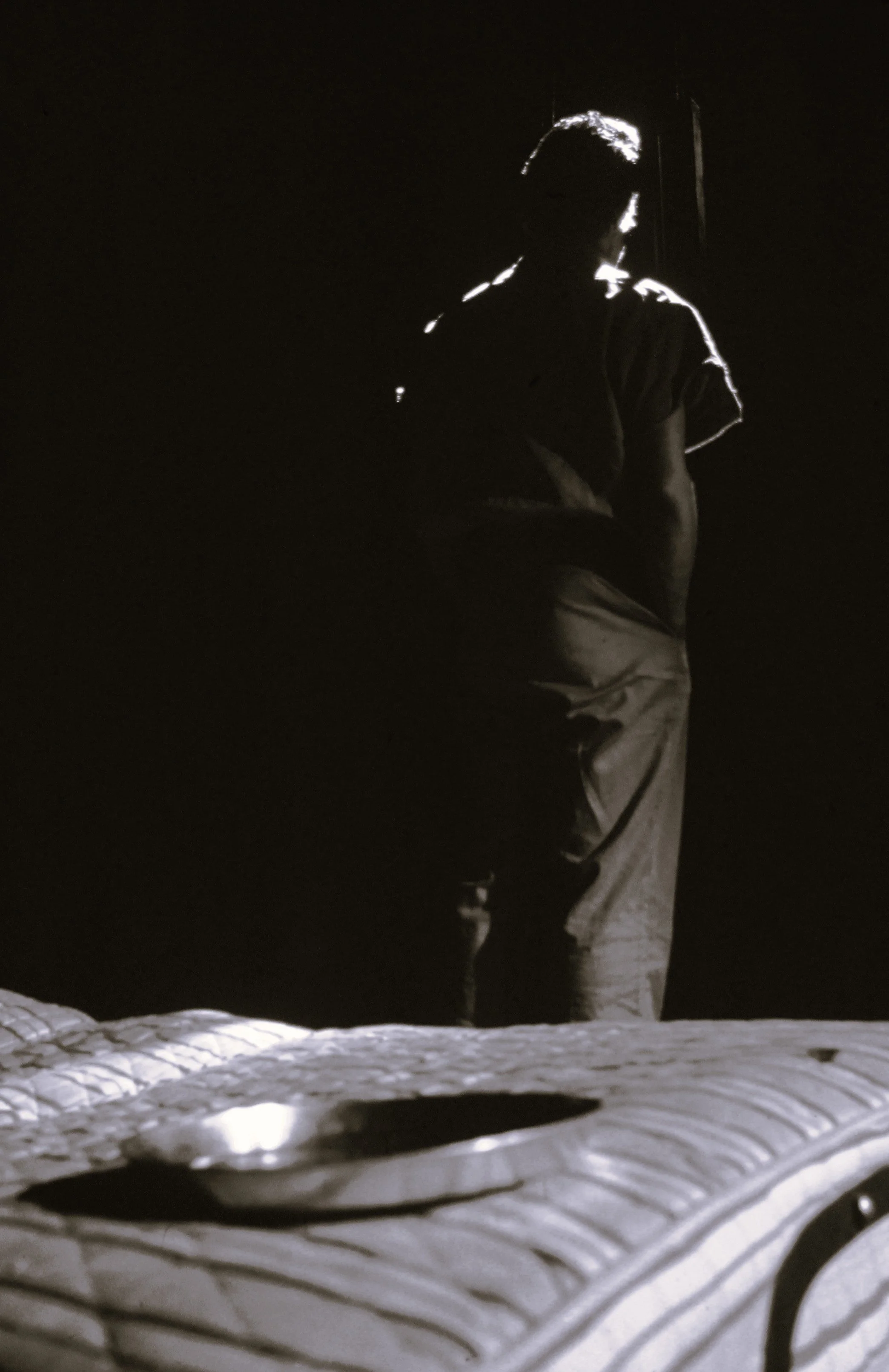
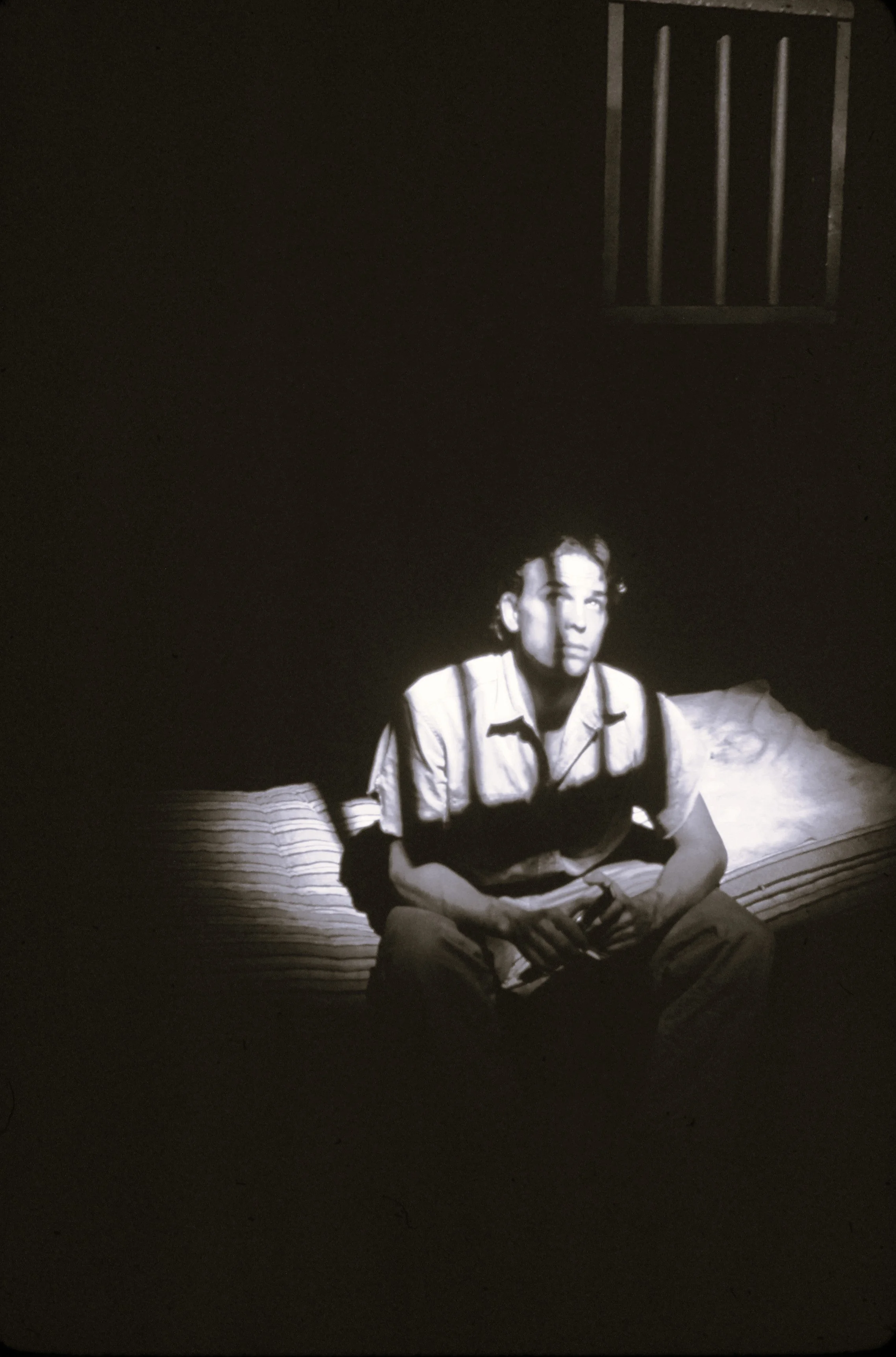
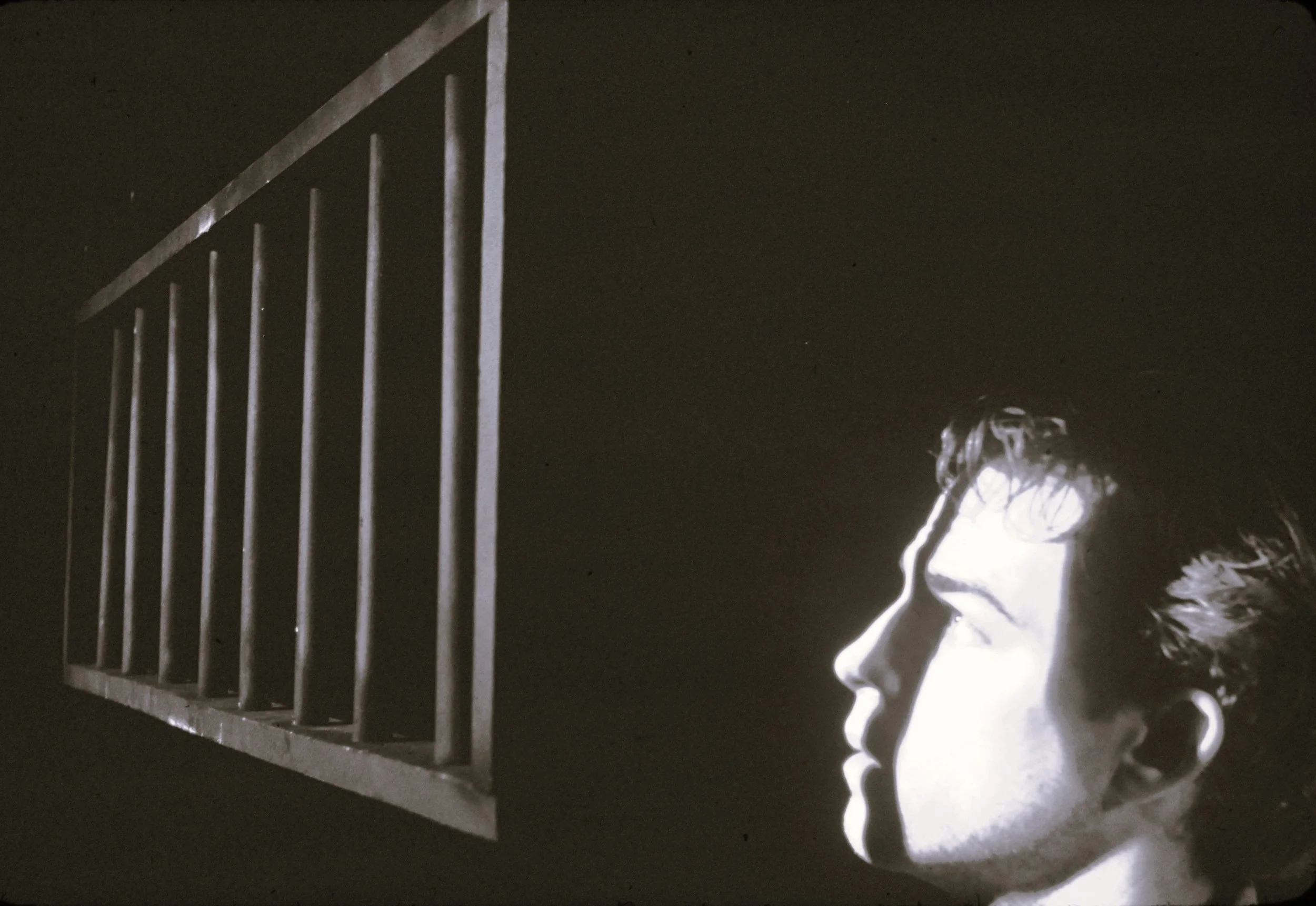
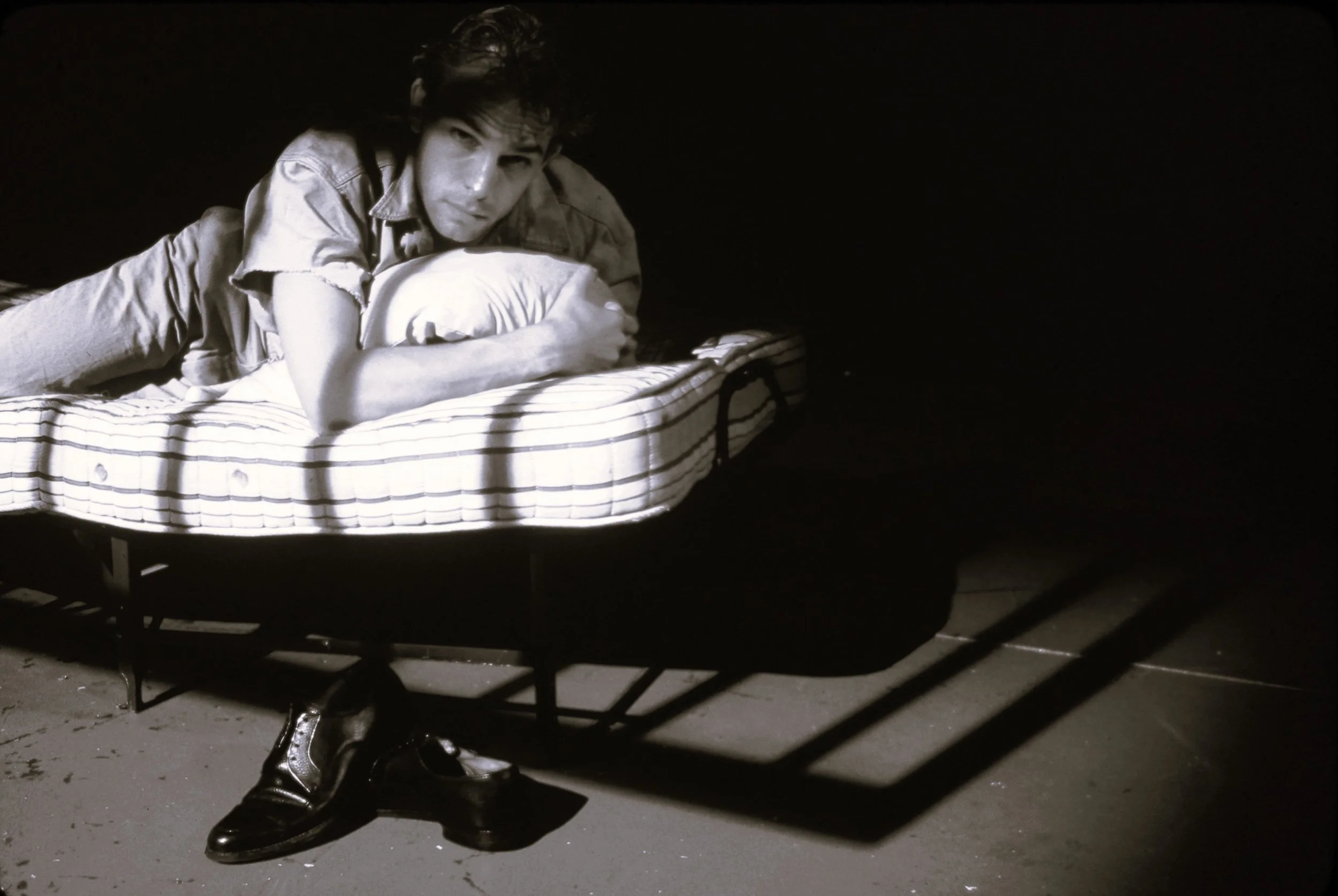
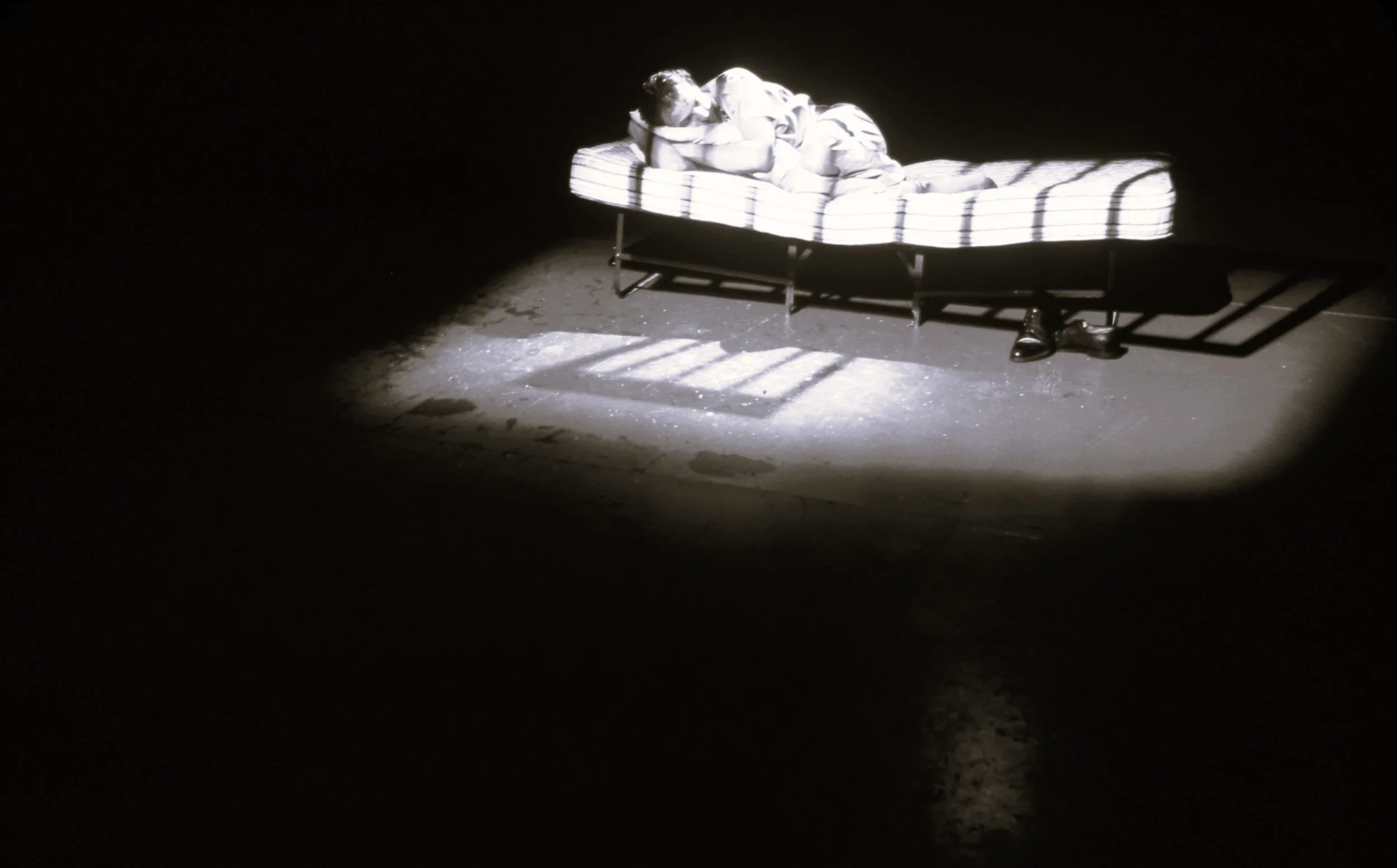
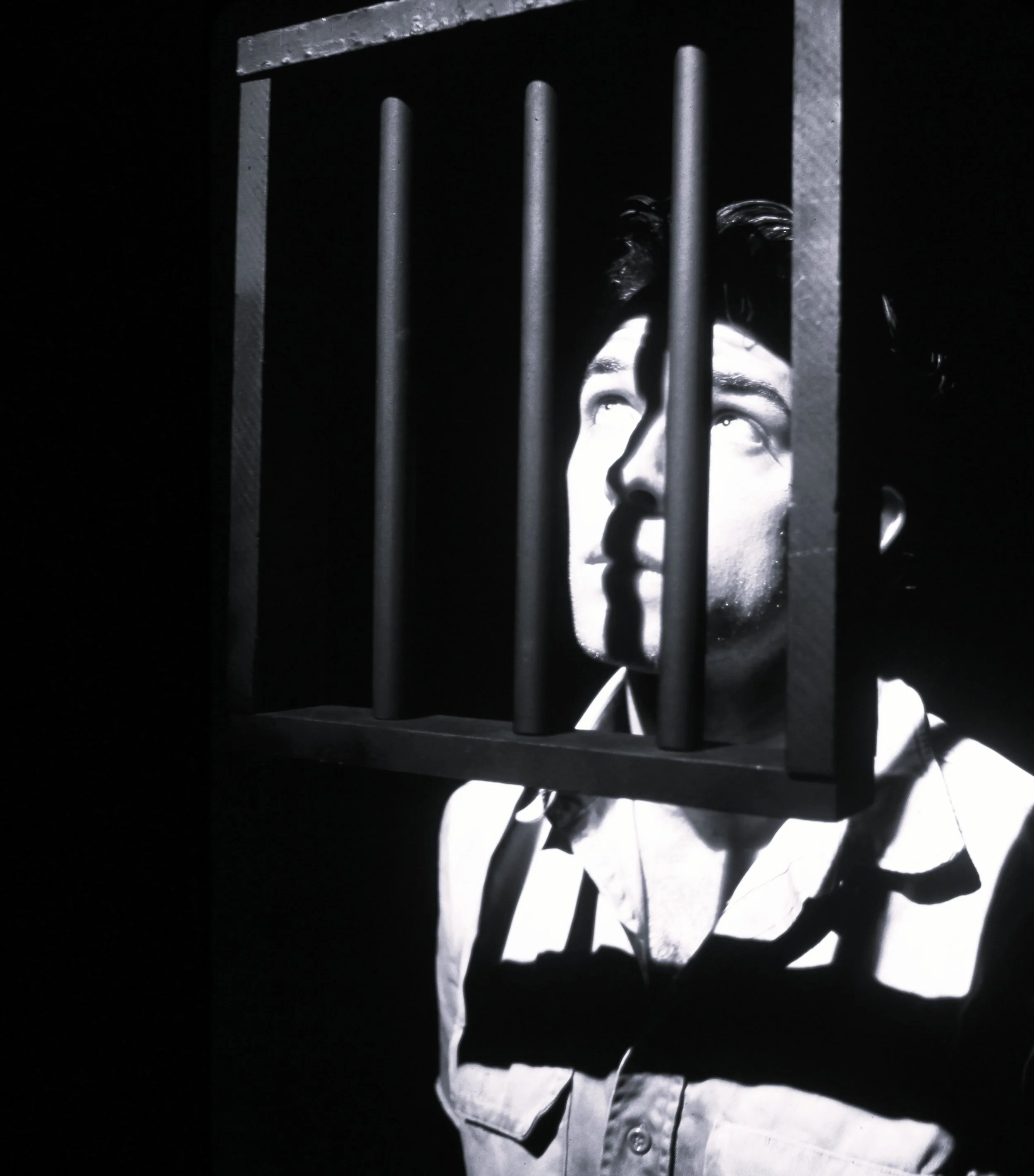
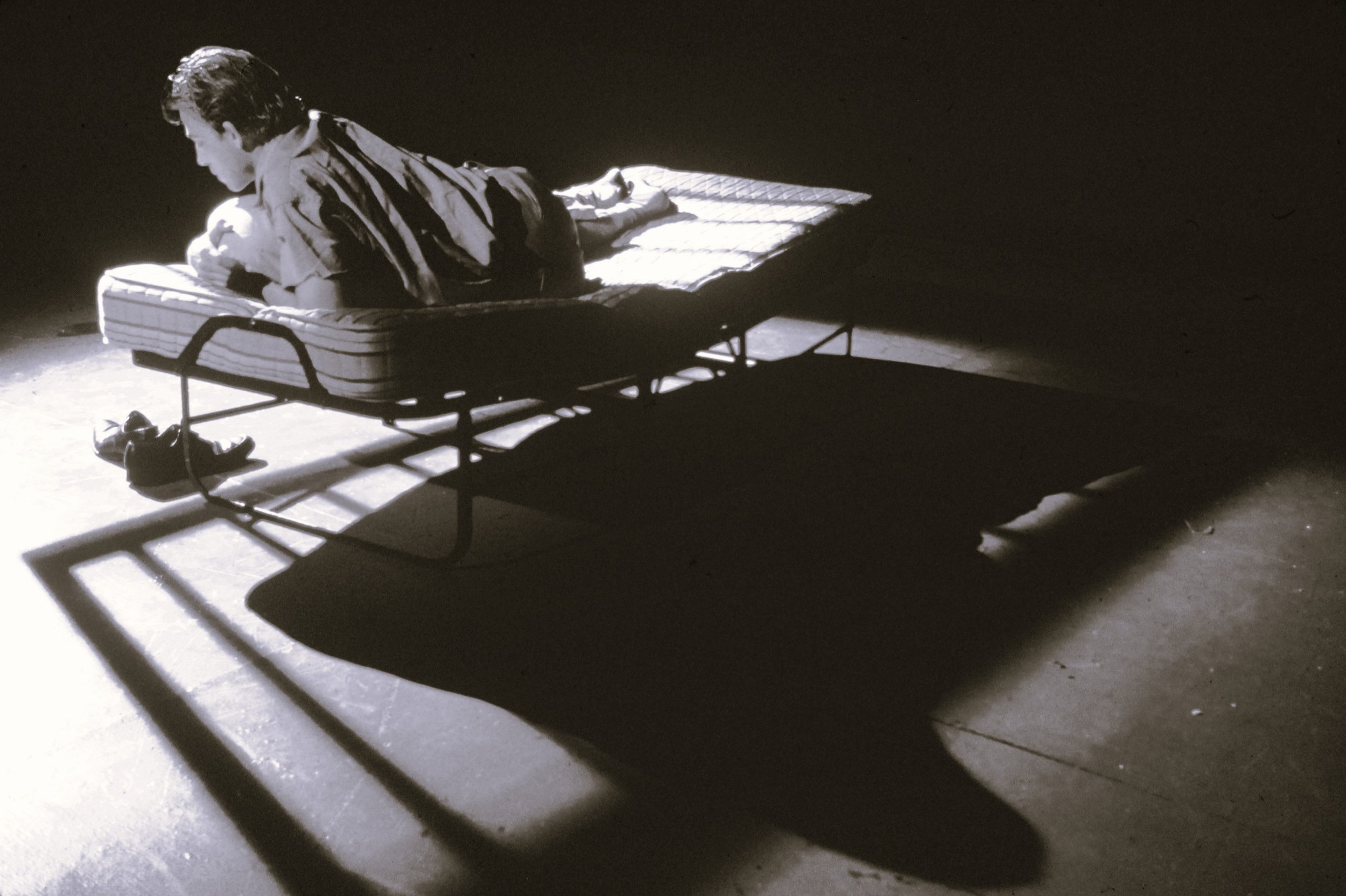
Meursault’s prison cell on stage left of center stage. Two black framed windows with round vertical bars are suspended from the overhead grid. One window is small and square, at eye level on the left side of the set, the other window is rectangular, above eye level, and is on the right side of the set. A cot with a mattress sits on the opposite side of the stage at the window in which Meursault relates during the various parts of the monologue. A soiled pillow is at the head of the cot and at the foot of the cot, on the floor, lie a pair of black shoes without shoelaces. The cell is lighted by a square area of warm (yellow) light – encasing the two windows and the cot. This is the fading sunlight from which Meursault is separated. Special lighting shines through the individual windows at different times during the monologue and there is one special bright “white” light used during the recall of the murder.
Costumes – Meursault
Khaki slacks (no belt)
Khaki shirt with torn off sleeves
Khaki worn socks
A pair of black scuffed shoes with no laces
Tin Plate (bread)
The monologue begins:
Meursault is inside his prison cell. Two windows are suspended from which light comes through – one is small and square, at eye-level, the other is rectangular above eye-level. A cot with a mattress and soiled pillow. A pair of black shoes without shoelaces lay next to the cot.
He is sitting on the middle of the cot. He is wearing a shirt with ripped off sleeves, pants with no belt, and socks – all in khaki color. He is eating bread from a tin plate. Sunlight is coming through one of the windows. He stops eating and notices his reflection in the plate. He looks to the light from the window.
The sun is setting and it is the hour when evening sounds creep up from all the floors of the prison . .
Having finished eating, Meursault puts the plate on the cot and stands. He moves toward the square window and peers out of it.
I can see the sea. One day I was looking at the sun when a jailer told me I had a visitor. It was Marie. Soon afterward I had a letter from her telling me they wouldn’t let her come to see me any more, because she wasn’t my wife – from that day on this cell has become my last home, a dead end.
The script is not included on the site; however, the images are from the original staging of the project at UC Davis - Studio A. Photos: Roy Wilcox